A beautiful window is only successful if it performs safely for decades.
Behind every high-end window and door system lies a carefully engineered structural framework designed to withstand wind pressure, glass weight, operational loads and environmental stresses. While aesthetics often attract attention, structural engineering determines whether a system remains safe, durable and reliable throughout its service life.
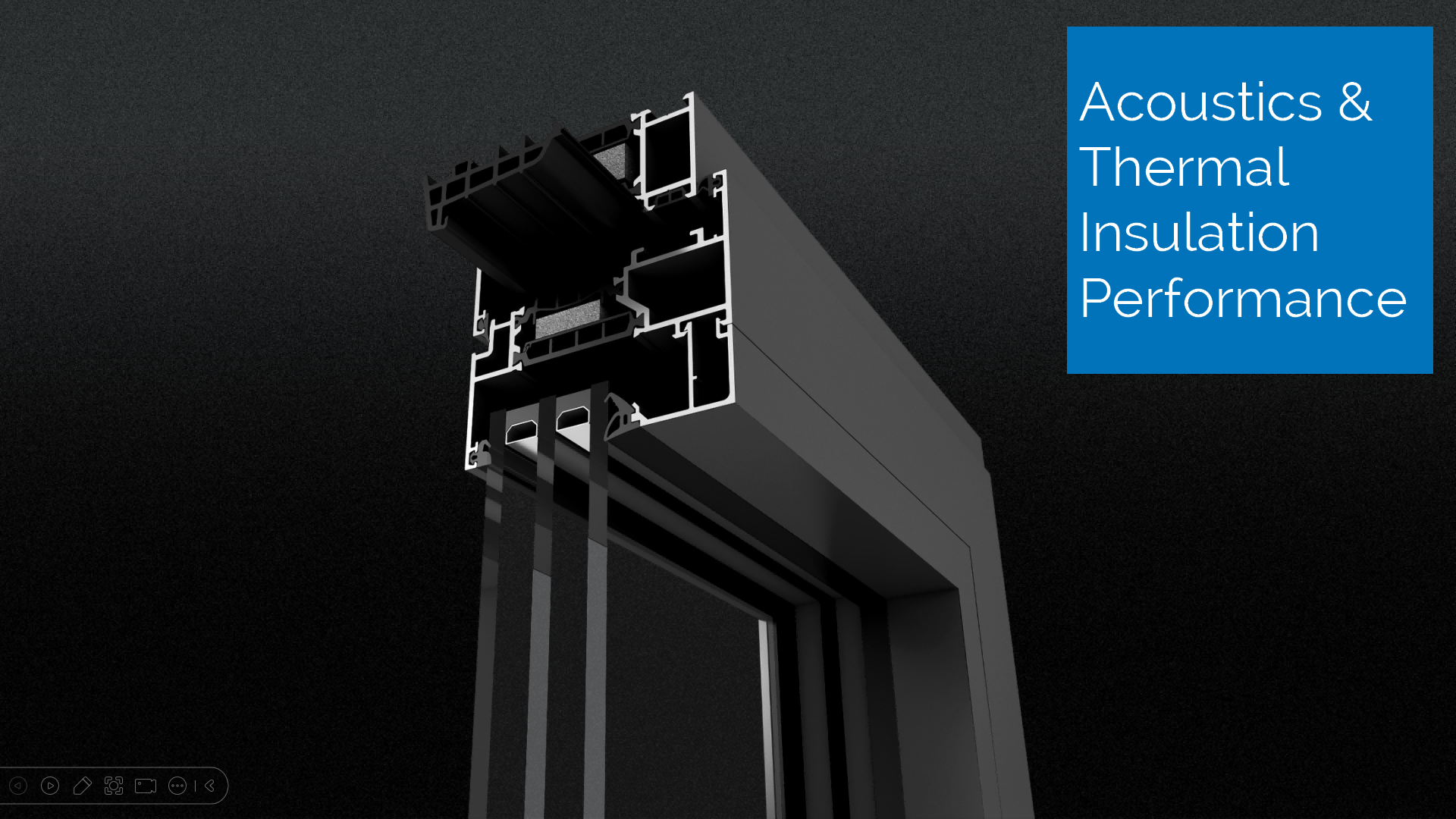
In Episode 5 of CIVRO’s "7 Key Dimensions" series, we explore the structural mechanics behind premium window and door systems, including load paths, mullion design, wind resistance, glass selection and stiffness requirements.
For architects, façade consultants and developers, understanding these engineering principles is essential to creating systems that are not only beautiful, but also structurally resilient.
Strength and Stiffness Are the Foundation of Good Design
Before considering aesthetics, ventilation or thermal performance, every window and door system must first satisfy two fundamental engineering requirements:
Strength
The ability of a component to resist failure under load.
Stiffness
The ability of a component to resist excessive deformation under load.
A system may be strong enough not to break, but if it deflects excessively under wind pressure, operational problems, air leakage and long-term fatigue can occur.
Proper structural design provides:
Greater operational safety
Improved durability
Better weather resistance
Reduced maintenance
Longer service life
In premium architectural projects, structural performance should never be treated as an afterthought.
Selecting the Primary Load-Bearing Member
In most window and door systems, mullions and transoms work together to transfer loads to the building structure.
However, they do not always perform equally.
Generally speaking:
Vertical Mullions (Mullions)
Are preferred as the primary load-bearing members because they primarily resist wind pressure and transfer loads directly to the structure.
Horizontal Transoms
Must resist both:
Wind loads
Self-weight (dead load)
Because transoms carry multiple load types simultaneously, their stress condition is often less favourable than vertical mullions.
Therefore, in most standard configurations, vertical mullions are selected as the principal structural members.
Exception: Tall and Narrow Openings
When window height is significantly greater than width, structural behaviour changes.
In these situations, horizontal transoms may become the dominant load-bearing members and should be engineered accordingly.
Good structural design always follows the actual load path rather than a fixed design formula.
Wind Load Is Usually the Governing Design Factor
Among all forces acting on windows and doors, wind pressure is typically the most critical structural load.
This is especially true in:
High-rise buildings
Coastal developments
Typhoon-prone regions
Open exposure environments
Tall curtain wall applications
For this reason, profile geometry and reinforcement strategies should always prioritise wind resistance.
Effective reinforcement strategies include:
Reinforced Mullion Design
Rather than increasing visible profile width, engineers often strengthen mullions internally by increasing their moment of inertia.
Benefits include:
Higher structural capacity
Reduced deflection
Better visual appearance
Slimmer sightlines
Improved architectural aesthetics
The most efficient structures are often those that achieve greater strength with minimal visual impact.
Managing Long Combined Assemblies
In some projects, fixed windows and sliding windows are vertically combined into large assemblies.
When the combined connection length exceeds approximately 1800 mm, excessive deflection may occur at the connection zone or central mullion.
Potential issues include:
Sagging
Installation difficulties
Operational resistance
Poor alignment
Long-term deformation
A common engineering solution is to introduce additional vertical support members through lower fixed panels or modified mullion arrangements.
This strategy helps:
Reduce span length
Improve structural stiffness
Simplify installation
Maintain long-term operational performance
Proper structural segmentation is often more effective than simply increasing profile thickness.
Glass Is a Structural Component
Glass should never be viewed solely as a transparent material.
In modern fenestration systems, glass functions as a structural element and must satisfy both strength and stiffness requirements.
When glass thickness is insufficient, several problems may occur:
Glass breakage
Excessive deflection
Seal failure
Reduced acoustic performance
Reduced thermal performance
Distortion of reflected images
In insulating glass units (IGUs), excessive glass deflection may cause the inner and outer panes to contact each other, creating the well-known "rainbow effect."
This phenomenon can compromise:
Thermal insulation performance
Acoustic insulation performance
Long-term IGU durability
Glass Thickness Must Match Panel Size
Glass selection should always be based on:
Panel area
Aspect ratio
Wind load
Building height
Glass support conditions
Safety requirements
As a general design guideline:
Window Glass
For insulated glass units exceeding approximately 2.6 m², a minimum 6 mm glass thickness is commonly recommended.
Single Glass Applications
Glass thickness should generally not be less than 6 mm for architectural applications.
Door Glass
For safety and impact resistance reasons, glass thickness below 6 mm is generally not recommended in door systems.
Where engineering calculations indicate insufficient strength or stiffness, increasing glass thickness becomes necessary.
However, thicker glass also introduces additional considerations:
Increased unit weight
Transportation complexity
Installation difficulty
Maintenance challenges
Higher hardware loads
The most successful design balances structural performance with practical constructability.
Curved Glass Requires Special Engineering Consideration
Curved glass introduces additional structural complexity.
Unlike fully tempered flat glass, curved architectural glass is often produced through specialised bending processes and may exhibit different mechanical characteristics.
Engineers must consider:
Radius of curvature
Manufacturing limitations
Structural behaviour
Installation tolerances
Transportation constraints
Because curved glazing systems are highly customised, early coordination between designers, manufacturers and engineers is essential.
A visually stunning curved façade can only succeed when structural engineering is integrated from the earliest design stages.
Structural Design Is Invisible — But Critical
Clients often notice views, aesthetics and hardware.
What they do not see is the engineering that keeps those systems performing year after year.
Good structural design delivers:
Safer buildings
Longer service life
Better weather performance
Improved operational reliability
Lower lifecycle costs
Ultimately, premium window and door systems are not defined by appearance alone.
They are defined by how well they perform under real-world conditions.
And that performance begins with structural engineering.